


Why It's Important to Know the Porosity of Your Curls

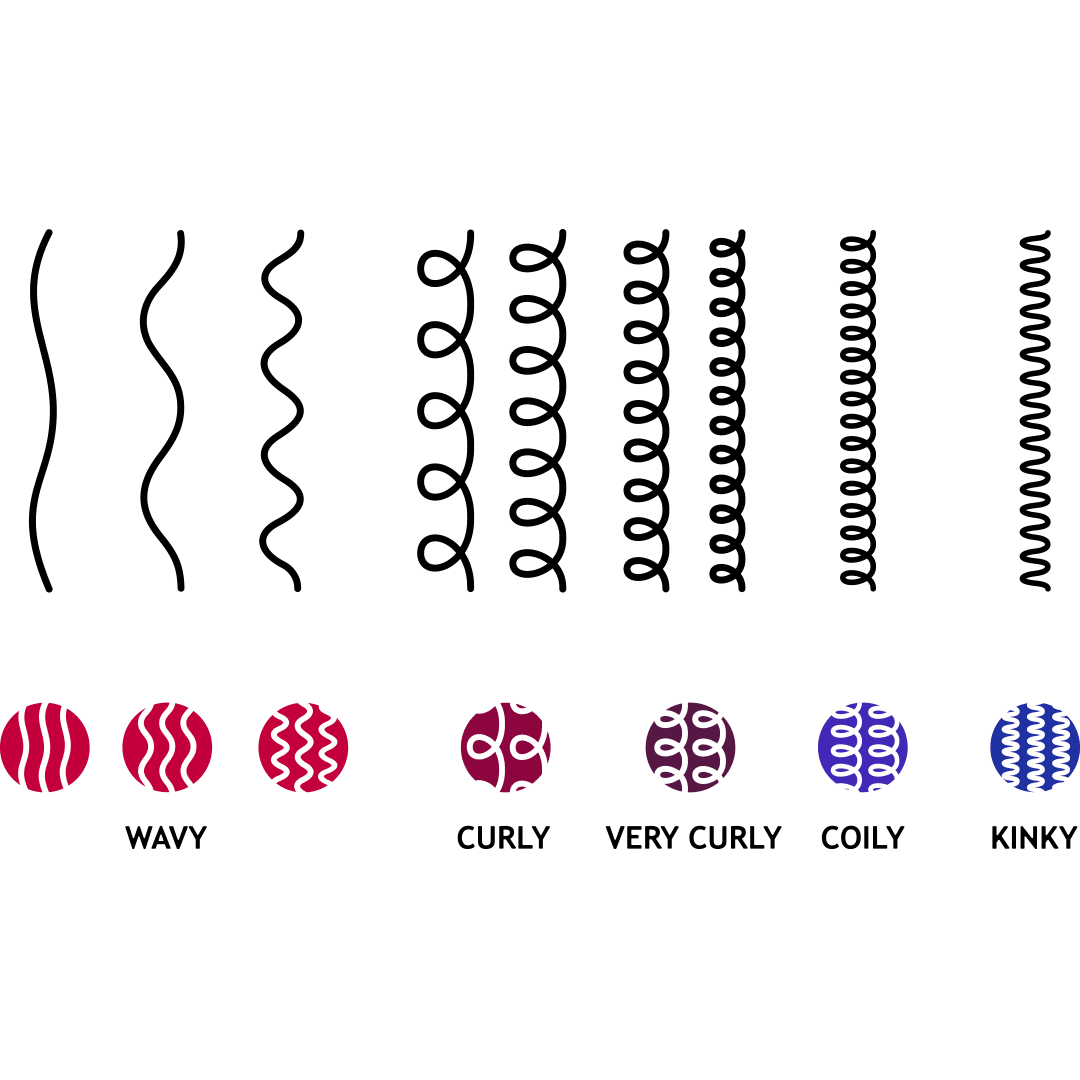
Every curl type is unique, and it’s crucial to understand your own hair porosity to get the most out of your curl care routine. In other words, knowing your curl porosity is the first step to giving your curls the right care so you can start and end every day with healthy, shiny curls.
What is hair porosity?
Simply put, porosity refers to your curls’ ability to absorb water and, more importantly, retain moisture. There are three ways to determine the porosity of your curl type.
(FYI: the options are: low, medium, and high).
- The toughest
Take a small strand of hair between your fingers at different points on your head and run your fingers along the hair from the ends to the roots. If your fingers just skim the hair and it feels firm and hard, you have low porosity. If your hair feels smooth and you can easily slide your fingers up through it, you have normal porosity. But if your hair feels rough or dry and breaks easily, you have high porosity.
- The test with the unusual hair
Another way to check your curls for porosity is to place a strand of hair that fell out while combing into a glass of water. If the hair floats to the top, you have high porosity. If the hair sinks slowly to the bottom, your hair has "normal" porosity. But if it sinks quickly to the bottom, you have high porosity.
- The water spray test
To determine your hair's porosity, you can also spray a little water on a section of your curls and see how your hair reacts. If your hair absorbs the water quickly, this is a sign of high porosity. However, if the water simply sits on the hair, this is a sign of low porosity.
Although these three tests are a good starting point for determining porosity, there are other signs to look out for:
Characteristics of curls with high porosity:

- It takes a long time to dry my curls.
- Skincare products tend to build up on the skin rather than being absorbed.
- Natural oils do not penetrate the hair immediately, but remain "on the strands."
- The curls take a relatively long time to soak once you wet them.
The characteristics of curls with normal porosity:

- The curls are elastic and bouncy.
- Curly hair requires relatively little "maintenance."
- The curls absorb moisture and hold onto it.
- The curls hold their shape easily and take dye well.
The characteristics of high-porosity curls:

- Curly hair absorbs water quickly, but it needs more product
- Curly hair often feels dry and looks dry
- Curls are often frizzy
- The curls dry quickly
Now that we know how to determine your curl type, let's take a look at what each curl type needs.
The right curl care for different levels of porosity
The right curl care for high porosity
Curls with low porosity have very compact cuticles, which makes it difficult for moisture to penetrate the hair. But there’s good news: once the curls are hydrated, they retain moisture very well. You can follow these tips to open up the cuticles:
- Heat is your friend. Use Reconstructing Deep Treatments under a hair dryer or a shower cap wrapped in a towel to increase the heat under the plastic cap. The heat opens the hair cuticles, allowing the products to penetrate more effectively.
- Distribute the product evenly through the curls and don't use too much.
- Apply the products to damp or wet hair.
- Use sulfate-free shampoos and products containing apple cider vinegar, or make your own apple cider vinegar rinses to remove product buildup from your hair. (Due to the structure of the hair, buildup forms quickly.)
At lockenkopf , you'll find all the products specially developed for deeply porous curls.
The right curl care for normal porosity
Curly hair with normal porosity has a compact cuticle (hair scales) that easily allows moisture to penetrate.
- Regular deep conditioning treatments help ensure that your curls are always well-nourished.
The right curl care for high porosity
Dry, thirsty curls need products to help them absorb as much moisture as possible. Follow these tips to boost your curls' hydration:
- Do not use heat. It is best to let the curls air dry.
- Use deep-conditioning treatments (Curl Masque) regularly and finish your curl routine with moisturizing leave-in and/or styling products.
- Rinse your hair with cold water at the end of your wash routine—the colder, the better. (Cold water closes the hair cuticles and helps curls retain moisture better.)
- Gently detangle her hair with your fingers or a wide-toothed comb to prevent breakage and hair loss.
- Finally, use products that help your curls retain moisture.
At lockenkopf , you'll find all the products specially developed for high-porosity curls.
Texture, elasticity, density, and porosity are all indicators of your curl type, and now that you know which type you are, you can try caring for your curls accordingly to give your hair its natural shine.
"If you have any questions about our product selection, please send me an email or a WhatsApp message, and I'll be happy to help you choose the right products. To give you the best advice, I'd appreciate it if you could send me a photo of your curls along with your questions."
That's it for me for now. See you soon, my curly-haired friends.
With warm regards
Rosa Maria