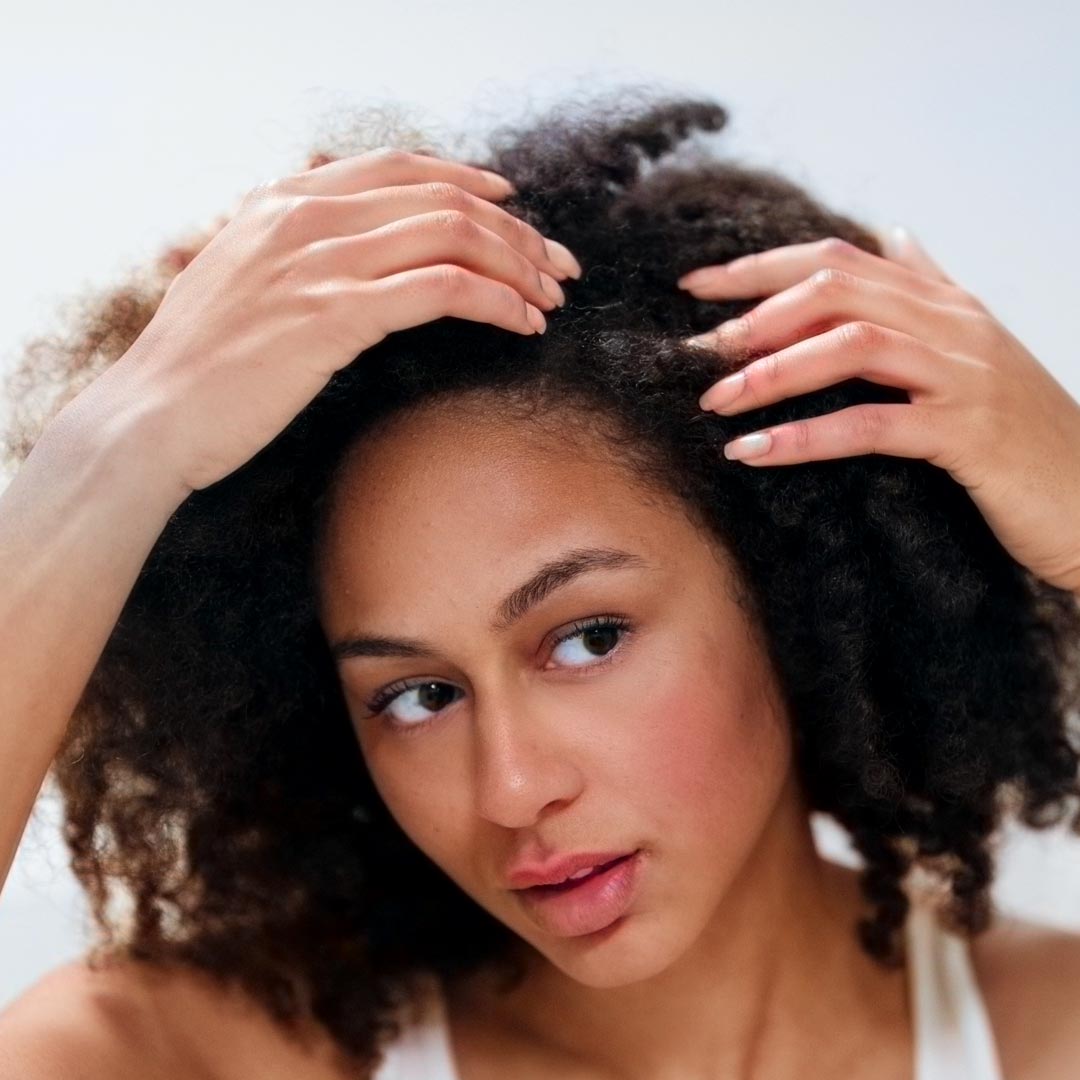



When curly hair gets too much care: what's really behind this problem
You may have experienced this before: your curls suddenly feel heavy, dull, and somehow lifeless—even though you’ve been taking great care of them. Many people with curly hair are familiar with this phenomenon. The cause is often over-conditioning: too many deep conditioning treatments, overly rich products, or an imbalance between moisture and protein.
But don't worry—your curly mane isn't a lost cause. In this article, you'll learn how to tell when your curls are too tamed, what factors play a role, and what steps to take to restore their natural strength and bounce.
What exactly are overly neat curls?
You want to pamper your curls—masks, leave-in conditioners, oils, and even a serum to top it all off. But suddenly, they don’t look vibrant anymore; instead, they’re tired, limp, and heavy. This is what’s known as the “over-treated curls” phenomenon. It means your curls have been thrown off balance by too much product. In short, over-treated curls occur when products are applied without balance, resulting in limp, heavy curls.
A paradox arises when curls are over-styled: instead of defined, bouncy curls, you end up with limp waves that lose their bounce. Your hair may even feel soft to the touch, but it’s more “rubbery” than healthy. This condition has nothing to do with a lack of care—but rather with the fact that the protein-moisture balance has been disrupted.
If the balance is off, your curls will suffer from either too much moisture or too much protein. In the first case, they’ll be overly puffy and look limp; in the second, they’ll feel dry, straw-like, and brittle to the touch. That’s exactly why getting the right balance is so important.
And there’s a third culprit: what’s known as product buildup. This means that products, silicones, or even minerals from hard water build up on your hair. As a result, your hair looks greasy or weighed down, even if you’ve just washed it.
In short: overly neat curls aren’t a sign of laziness, but rather of too much of a good thing. But don’t worry, curly-haired friend—once you understand the causes, you can restore balance to your curls step by step.
The typical signs of curls that are too styled are:
- the limp curls, which hang limply and without bounce.
- oily curlswhich, even shortly after washing, feel stringy and heavy.
- The curls feel greasy after washing — a classic sign of buildup.
- The curls have a waxy feel, especially along the lengths.
- An itchy or flaky scalp caused by a lack of scalp cleansing.
- The curls lose their definition and quickly go limp.
So the problem isn't a lack of cleanliness, but the fact that the balance of your curls has been disrupted—and that's exactly what we're going to restore together now.
Excess moisture and risk of waterlogging
If your curly hair is constantly treated with conditioners, leave-in treatments, and rich moisturizing masks, it can end up feeling weighed down. It looks soft, but also limp and rubbery. Often, a strand can stretch out in an unusual way—instead of bouncing back with a soft "snap," it stays stretched out.
If your curls are too limp and feel almost rubbery, this is a clear sign of excess moisture. This is caused by the constant swelling and shrinking of the hair shaft with every wash—a process known as hygrometric fatigue. The hair loses its elasticity, becomes weak, and tends to break.
What you need to know is thathydration isn’t bad in and of itself. It’s only when it’s used without being balanced by protein that the system becomes unbalanced. The right balance makes all the difference.
Excess Protein and Why the Protein-Moisture Balance Is So Important
While too much moisture makes your hair feel limp,too much protein has the opposite effect: your curls feel stiff, dry, and straw-like. Instead of a springy bounce, you feel resistance when you comb or style your hair—and sometimes the curls even break with the slightest tug.
Hair proteins act as a framework for your curls—but too much protein makes them brittle. The right amount of protein in your curls is essential: enough for stability, but never so much that your curls look stiff.
Here, too, hair needs both: protein and moisture. Only by combining the two can you achievethe protein-moisture balance that keeps your curls healthy, strong, and bouncy.
A simple hair porosity test will help you determine whether your curls need more protein or more moisture.
Excess protein in curly hair: An excess of protein makes the hair shaft stiff and prone to breakage.
Build-up - when products make things worse
Sometimes, the problem isn’t actually caused by too much protein or moisture, but simply by buildup. This means that residue is building up on your hair and scalp: styling products, rich conditioners, curl care products, silicones, or even minerals from hard water.
The most insidious: Product buildup mimicsthe same symptoms as over-styled curls. Your curls look heavy, lack bounce, and lose their definition, even if you’ve just washed them. Sometimes, your scalp is also itchy or oily—a sure sign that buildup is to blame.
In this situation, many people with curly hair instinctively reach for more products—but in doing so, they only make the problem worse. Instead of another moisturizing mask or an extra dose of oil, your hair needs something very different at this point: a reset. With a good deep-cleansing shampoo—such asthe sulfate-freeshampoo" " Deep Cleansing Shampoo or a targeted deep cleanse like " " hair—you remove stubborn buildup from products, minerals, and environmental factors. Plus, the pH is balanced, and your curls immediately feel lighter and more bouncy. If you prefer a natural alternative, you can use a homemade vinegar rinse (for example, with apple cider vinegar) as a temporary reset.
It’s therefore important to identify the cause: Are your curls really out of balance, or is it simply a case of product buildup? Only once you know the answer can you take targeted action—and spare yourself the frustration of endless failed attempts.
Symptom Matrix - Excess Moisture vs. Excess Protein vs. Buildup
|
Symptom / sensation in the hair |
Excess moisture |
Excess protein |
Build-up |
|
Hair Sensation |
supple, but rubbery |
fibrous, hard, brittle |
heavy, grass, weighed down |
|
Elasticity |
very stretchy, "worn" |
barely stretchy, tears easily |
no real change, rather dull |
|
Definition of the loop |
sways loosely, with little spring |
a tousled appearance, not much of a boot |
no definition; the loops "stick" together |
|
Typical case |
Too many moisturizing masks, no protein balance |
Too much protein, lack of moisture |
Deposits of products or minerals |
|
Emergency aid |
targeted protein regimen |
rich moisturizing mask |
Deep-cleansing shampoo or acid rinse |
The Rescue Plan: The Right Care for Curly Hair to Restore Balance to Your Curls.
If your curls are over-treated, there’s no need to cut them drastically—just adopt the right strategy. Proper curl care means choosing gentle curl-friendly products, maintaining a balance between protein and moisture, and giving your hair a real break every now and then. With targeted steps like deep cleansing, the right hair care, and light styling products such as curl-defining mousse or curl-defining cream, you’ll restore your curls’ bounce and definition.
Reset with deep-cleansing shampoo
If your curls are heavy and lack bounce, the first step is to start fresh—a gentle deep cleanse will effectively remove buildup from your curls. An apple cider vinegar rinse can also help gently clarify your hair and scalp.
How often should you use a deep-cleansing shampoo? For most curly hair, once every 4 to 6 weeks is sufficient—or a little sooner if there is significant product buildup.
Restore balance—protein treatment or hydrating mask
- If the hair is too damp, use a protein treatment— —to restore its strength.
- If your hair has too much protein, you need a protein-free moisturizing mask to restore its suppleness.
How often should I use the hair treatment? Once a week is a good starting point—reduce the frequency as soon as your hair regains its structure and bounce.
Adapter to the routine—less is often more
Taking care of your curls isn’t always easy. Many curls that look too styled are the result of using too many products. That’s why: choose lighter formulas, follow the recommended application times, and give your curls a break. This way, you can care for your curly hair without weighing it down unnecessarily.
A lightweight curl mousse provides hold without weighing down the hair. A subtle curl-defining cream helps condition your hair if you use it sparingly.
Prevention of Chronic Fatigue
To avoid falling back into the trap of over-styling, stick to simple routines: a light pre-wash treatment with coconut oil, washing your hair not too often, and products that provide a balance of protein and moisture.
How often should you wash your curls ? 2 to 8 times a month is usually enough, but every head of curls is different—find the right rhythm for your own. If you tend to use shampoo more often (for example, after working out), use only a small amount and focus mainly on the scalp and roots. This way, the roots are cleaned and rid of the oil produced by the body, without over-drying the ends (the oldest hair). Since they’re so close to the scalp, curls are constantly lubricated by the skin.
Conclusion
Curls that are too well-groomed aren’t a reason to panic, but a sign that your curls are trying to tell you something. Whether it’s too much humidity, too much protein, or simply product buildup, if you identify the cause and take targeted action, you’ll get your curls back to being healthy and bouncy.
Don't forget:less is sometimes more. Trust your intuition, listen to your curls—and be patient. Your curls need time to regain their balance.