


Why is it important to know the porosity of your curls?

Every type of curl is unique, and it’s essential to understand your hair’s porosity to get the most out of your curling routine. In other words, knowing the porosity of your curly hair is the first step toward providing it with the right care and enjoying a day with healthy, shiny curls.
What is hair porosity?
Simply put, porosity refers to your curls’ ability to absorb water and, more importantly, retain moisture. There are three ways to determine your curls’ porosity.
(FYI: you can choose from low, medium, or high).
- The strand test
Take a strand of hair between your fingers at different spots on your head and slide your fingers along the length of the hair from the ends toward the roots. If your fingers glide easily through the hair and it feels firm and stiff to the touch, you have high porosity. If your hair feels smooth to the touch and you can easily slide your fingers up the strand, you have normal porosity. But if your hair feels rough or dry to the touch and breaks easily, you have high porosity.
- The Extravagant Hair Test
Another way to test the porosity of your curls is to take a strand of hair that fell out while you were brushing and place it in a glass of water. If the strand floats to the top, you have deep porosity. If your hair sinks slowly to the bottom, your porosity is "normal." But if it sinks quickly to the bottom, you have high porosity.
- The water spray test
To determine the porosity of your curls, you can also spray a little water on a section of your curls and observe how your hair reacts. If your hair absorbs the water quickly, this is a sign of high porosity. If the water remains on the hair, this indicates low porosity.
While these three tests are a good starting point for determining your skin's porosity, there are also other signs you should look out for:
Features of deep-pore loops:

- The curls take a while to dry.
- Skincare products tend to "build up" rather than be absorbed.
- Natural oils don't penetrate the hair immediately, but remain "on the strands."
- The curls take a relatively long time to get wet when you wet them.
Characteristics of normal-porosity loops:

- The loops are elastic and bounce.
- Curly hair requires relatively little "maintenance."
- The curls easily absorb and retain moisture.
- The curls hold their shape well and take color beautifully.
Characteristics of high-porosity curls:

- Curls absorb water quickly, but they need more product.
- Curls often feel and look dry.
- Curls often get frizzy
- The curls dry quickly
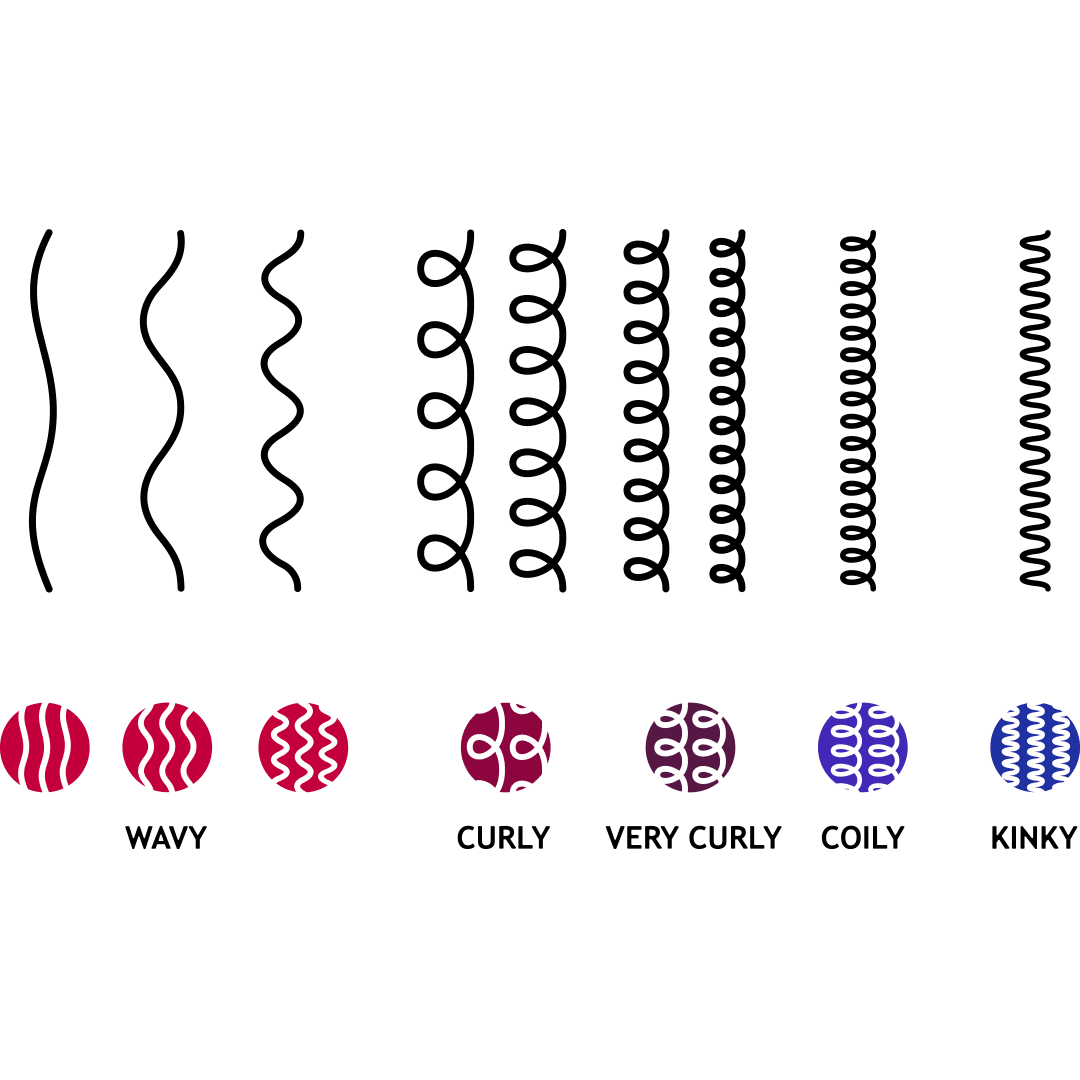
Now that we know how to determine our curly hair type, let’s see what each type of curly hair needs.
Curly hair care tailored to different levels of porosity
The right care for curls with deep porosity
Low-porosity curls have very compact cuticles (hair scales), which makes it difficult for moisture to penetrate the hair. But there’s also some good news: once the curls are hydrated, they retain moisture very well. To help the hair scales open up, you can follow these tips:
- Heat is your friend. Use deep-conditioning treatments under a hair dryer or a shower cap wrapped in a towel to further increase the heat inside the plastic cap. The heat opens up the hair cuticles, allowing the products to penetrate more effectively.
- Distribute the product evenly throughout your curls, and don't use too much.
- Apply the products to damp or wet hair.
- Use a sulfate-free shampoo and products containing apple cider vinegar, or make your own apple cider vinegar rinse to remove product buildup from your curls. (Due to the structure of your hair, buildup can form quickly.)
At lockenkopf, you'll find all the products specially designed for deep-porosity curls.
The right care for curls with normal porosity
Curls with normal porosity have compact cuticles (hair scales) that easily allow moisture to penetrate.
- Regular deep conditioning treatments help keep curls well-nourished.
The right care for curls with high porosity
Dry, parched curls need products that help them absorb as much moisture as possible. Follow these tips to boost the hydration of your curls:
- Don't use heat. It's best to let your curls air dry.
- Use deep conditioning treatments (curl masks) regularly and finish your curl routine with leave-in or styling products that are moisturizing.
- To finish the washing routine, rinse with cold water—the colder, the better. (Cold water closes the hair cuticles and helps curls retain moisture better.)
- Gently detangle with your fingers or a wide-tooth comb to prevent breakage and hair loss.
- Finally, use products that help keep your curls hydrated.
At lockenkopf, you'll find all the products specially designed for curly hair with high porosity.
Texture, elasticity, density, and porosity are all indicators of your curls’ unique characteristics. Now that you know your hair type, try to care for your curls accordingly to help your hair regain its natural shine.
"If you have any questions about choosing products, send me an email or a WhatsApp message, and I'll be happy to help you pick the right ones. To give you the best advice, I'd appreciate it if you could send me a photo of your curls along with your questions."
Well, that's all from me. See you soon, my dear curly-haired friends.
Best regards
Rosa Maria