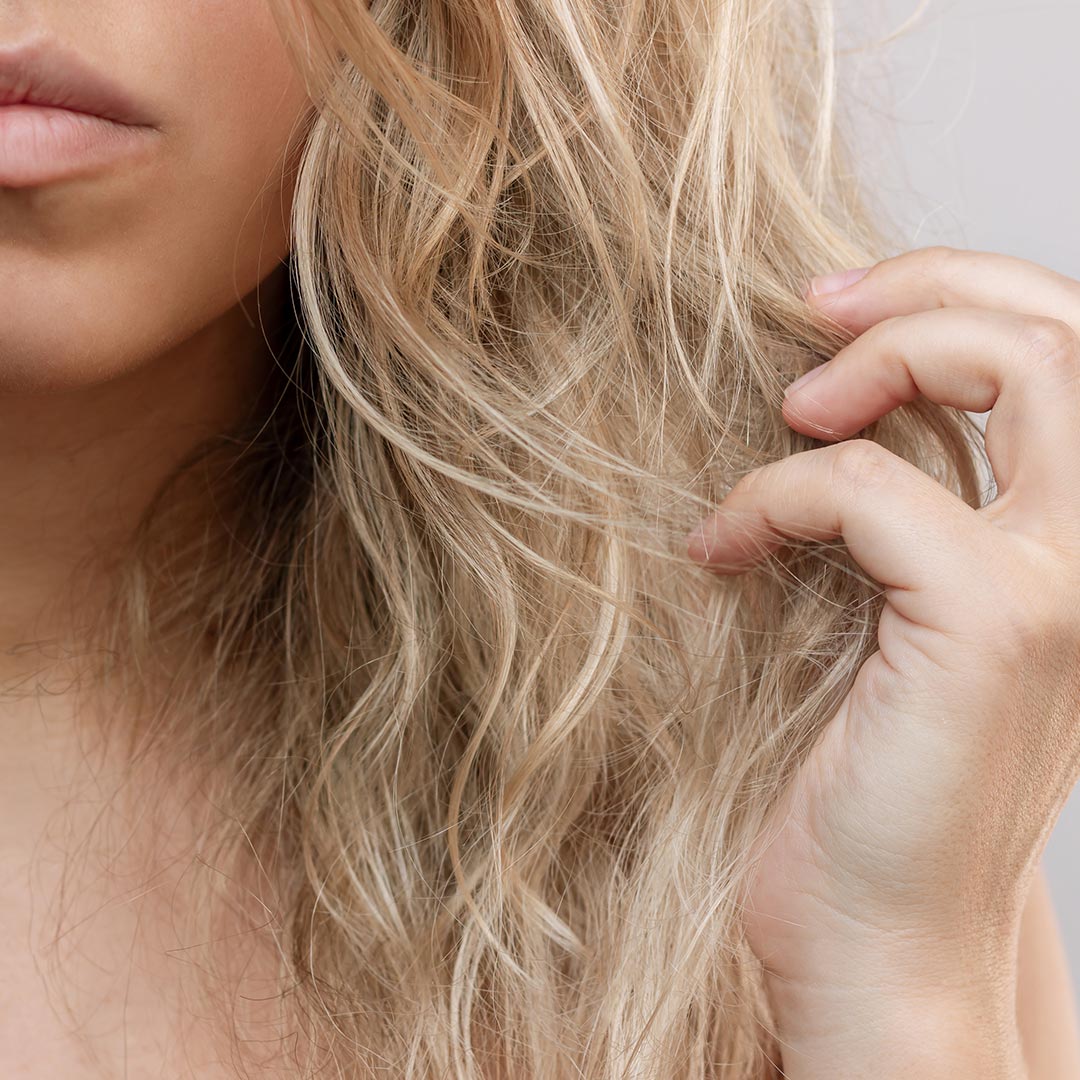



There are mornings when your curls suddenly seem strange. Just yesterday, they were soft, defined, and bouncy—today, they’re flat, dry, or tangled.
And even if you haven't done anything "wrong," nothing is going right.
This is precisely where the topic of protecting your curls overnight comes in. Not as just another step, but as one of the most important factors for maintaining beautiful, defined curls over the long term.
But while you sleep, more is happening than many people realize: friction, moisture loss, and movement alter the structure of your curls—night after night. If you learn how to properly protect your curls, not only will your mornings be more relaxed—your entire routine will be simpler and more reliable.
Why do curls lose their shape overnight?
Morning frizz almost always starts at night. Preventing frizz doesn't start with styling—it starts with your sleep routine.
Curly hair is naturally more delicate because the protective layer of sebum isn’t distributed evenly. Every movement against the pillow causes friction—and that’s exactly what leads to frizz, a loss of definition, and small knots.
Another key factor is moisture. If you go to sleep with damp curls, they are particularly stretchy and prone to damage. The structure can become distorted before they’ve even dried.
That's why, at night, it's not about "holding back" your curls—but about creating as little resistance as possible.
Satin vs. cotton: Which fabric do your curls really need?
Choosing the right pillowcase is crucial if you want to protect your curls while you sleep.
Cotton may feel soft, but it creates a lot more friction. Your curls get caught, stretched out, and lose their natural shape—resulting in frizz.
What's more, cotton robs your curls of moisture. Yet it is precisely this moisture that is crucial for softness and elasticity.
Satin, on the other hand, has a smooth surface. Your curls glide over it instead of rubbing against it. This helps maintain the hair’s structure and reduces frizz.
Many people notice a difference after just a few nights: fewer tangles, softer ends, and noticeably more definition.
Using a satin scarf is often the simplest and most effective way to get beautiful curls in the morning.
Which sleep technique is best for your curls?
The best-known method is the so-called "pineapple" technique.
Pineapple Method with Satin Scrunchie
To do this, gather your curls loosely on top of your head so they aren't squished between your head and the pillow.
Important: The braid shouldn't be too tight. Too much tension ruins the natural shape and causes kinks. Your curls should be supported—not pinned down.
For shorter or finer curls, using several small sections or loose twists often works best. This ensures that the pressure is distributed evenly.
And sometimes, we find that less is more. Very fine curls often look best when they’re moved as little as possible.
Beanie or pillowcase—which is better?
Many people wonder: Is a satin pillowcase enough—or do you need a pillow cover?
A pillowcase reduces friction but allows for movement. A hair cap, on the other hand, keeps your curls together and actively protects them from "falling out."
It makes a big difference, especially for longer or thicker curls.
The best solution is often a combination of the two.
Plopping—effective or not overnight?
Plopping is often done incorrectly.
It helps define curls after washing and absorb excess moisture—but it's not meant for sleeping.
If curls remain damp for too long, they dry unevenly and lose their definition. The scalp may also react.
It's best to use the plopping method just before drying your hair—not overnight.
A great way to refresh your curls in the morning
If you take care of your curls at night, you won't need to style them again in the morning.
Let your curls "settle" for a moment. They often fall into place on their own.
A light mist of water is usually enough to refresh the style. You can style individual strands as needed.
Using too much product or brushing your hair too much can quickly undo the results of your nighttime routine.
The key here is to do less.
Conclusion: Sleep with curls without frizz
Perfect curls don't start in the morning—they start at night.
By reducing friction, choosing the right products, and finding a technique that works for you, you can prevent frizz in the long run.
Your curls stay more defined, feel healthier to the touch, and your routine is much simpler.
These aren't major changes—but they're the right ones.
If you want to gain a deeper understanding of what your curls really need, it will help to take a look at the basics of hair structure and care.
And if you'd like, I'll personally guide you on your journey to finding your perfect curl routine: