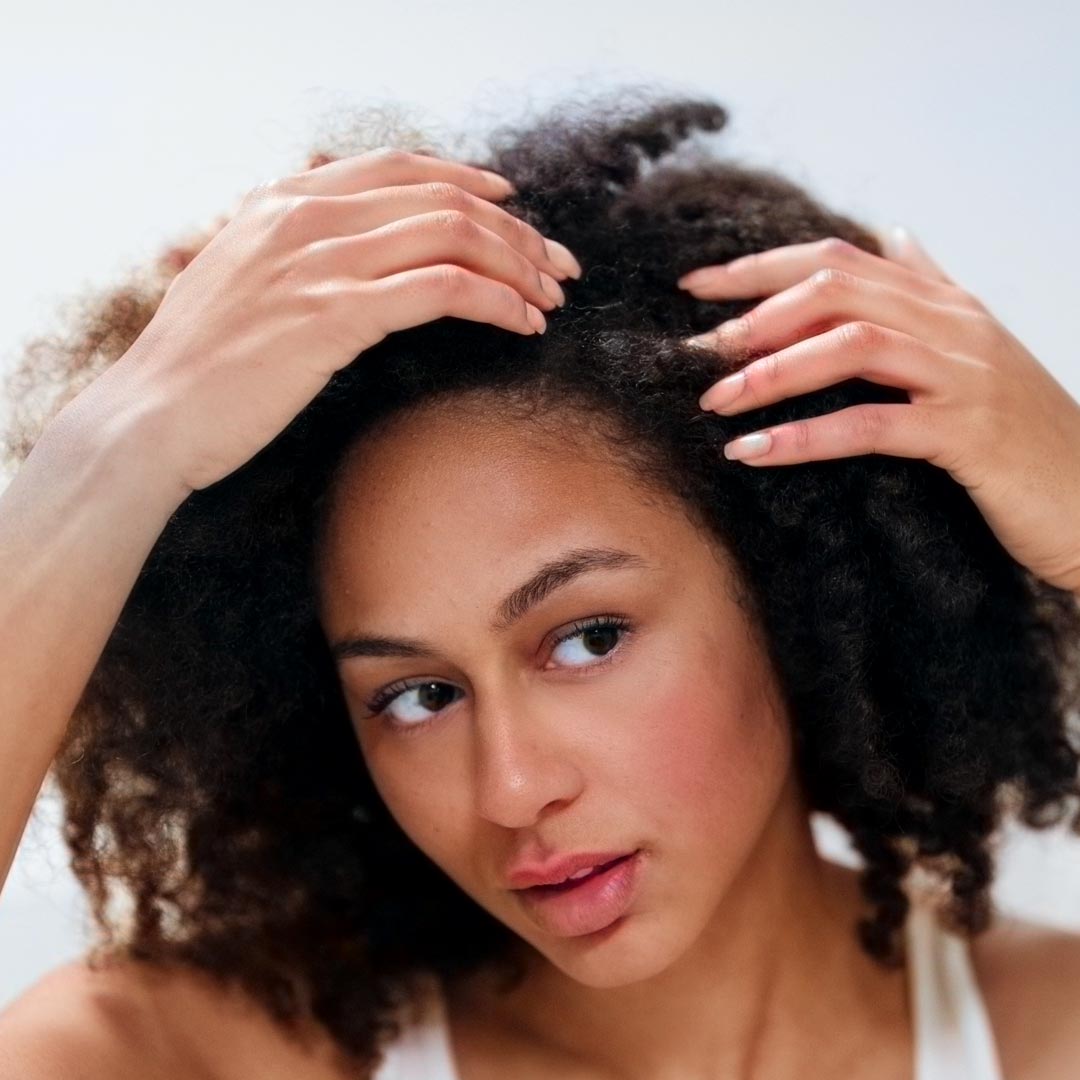



When curls get too much care – what's really behind it
Maybe you've already experienced it: Your curls suddenly seem heavy, dull and somehow lifeless – even though you've cared for them with dedication. Many curly heads know this phenomenon. The cause is often an oversupply: too many intensive masks, very rich products or an imbalance between moisture and protein.
But don't worry, your curly mane is not lost. In this article, you will learn how to recognize that your curls are over-conditioned, which factors play a role and with which steps you can give them back their natural strength and vitality.
Was genau sind überpflegte Locken?
Du willst deinen Locken etwas richtig Gutes tun – Masken, Leave-ins, Öle und noch ein Serum obendrauf. Doch plötzlich wirken sie nicht mehr lebendig, sondern müde, schlaff und schwer. Das beschreibt das Phänomen überpflegte Locken. Es bedeutet, dass deine Locken durch zu viel Pflege aus dem Gleichgewicht geraten sind. Kurz gesagt: überpflegtes Locken entsteht, wenn Pflege ohne Balance angewendet wird – sichtbar an schlaffen, schwer wirkenden Locken.
With over-conditioned curls, something paradoxical happens: instead of defined, elastic strands, you get weak waves that lose their bounce. Your hair might even feel soft, but more 'rubbery' than healthy. This condition has nothing to do with a lack of care – but rather with the protein-moisture balance being off.
When the balance is lost, your curls suffer either from excess moisture or excess protein. In the first case, they are too swollen and appear weak, in the second case, they feel dry, straw-like, and brittle. That's precisely why the right mix is crucial.
And there is a third culprit: so-called build-up. This means that products, silicones, or even minerals from hard water accumulate. Your hair then looks greasy or weighed down – even if you have just washed it.
In short: Over-conditioned curls are not a sign of too little effort, but of too much of a good thing. But don't worry, curly friend – once you know the causes, you can bring your curls back into balance step by step.
The typical signs of over-conditioned curls are:
- kraftlose Locken, das schlapp und ohne Sprungkraft herunterhängt.
- fettige Locken, die sich selbst kurz nach dem Waschen strähnig und beschwert anfühlen.
- Locken fühlen sich nach dem Waschen schmierig an – ein klassisches Zeichen für Ablagerungen.
- Locken fühlen sich wachsig an, besonders in den Längen.
- Eine juckende oder schuppige Kopfhaut durch fehlende Reinigung Kopfhaut.
- The curls lose their definition and quickly droop.
So, the problem isn't a lack of cleanliness, but that the balance of your curls is messed up – and we're going to bring it back into balance together now.
Moisture overload and the danger of hygral fatigue
If your curls are constantly supplied with conditioner, leave-in, and rich moisture masks, the hair can become oversaturated at some point. It looks soft, but also limp and rubbery. Often, a strand can be stretched unusually far – instead of snapping back with a gentle 'snap', it remains stretched out.
Sind deine Locken zu weich und wirken fast gummiartig, deutet das klar auf einen Feuchtigkeitsüberschuss hin. Ursache ist das ständige Aufquellen und Zusammenziehen der Haarfaser bei jeder Wäsche – die sogenannte Hygrale Ermüdung. Das Haar verliert an Elastizität, wird schwach und neigt zu Bruch.
Wichtig ist: Feuchtigkeitspflege an sich ist nicht falsch. Erst wenn sie ohne Ausgleich durch Proteine angewendet wird, gerät das System aus der Balance. Das richtige Mass macht den Unterschied.
Protein overload and why the protein-moisture balance is so important
Während beim Feuchtigkeitsüberschuss alles zu weich wirkt, zeigt sich ein Proteinüberschuss genau umgekehrt: Die Locken fühlen sich hart, strohig und trocken an. Statt federnder Elastizität spürst du beim Kämmen oder Stylen Widerstand – und manchmal brechen die Locken schon bei leichter Belastung.
Hair proteins act like a framework for your curls – too much of it, however, makes them brittle. The right amount of protein in the curls is crucial: enough for stability, but never so much that the curls appear stiff.
Again, the hair needs both – proteins and moisture. Only in combination does the protein-moisture balance arise, which makes your curls healthy, strong, and full of bounce.
A simple hair porosity test helps you to recognize whether your curls need more proteins or more moisture.
Curly hair protein overloadToo much protein makes the hair fiber stiff and prone to breakage.
Build-up – when products make everything even worse
Manchmal steckt hinter dem Problem gar kein echter Proteinüberschuss oder Feuchtigkeitsüberschuss – sondern schlicht Build-up. Das bedeutet, dass sich Rückstände auf deinem Haar und deiner Kopfhaut ablagern: von Stylingprodukten, reichhaltigen Conditionern, Lockenpflege Produkte, Silikonen oder sogar Mineralien aus hartem Wasser.
Das Tückische daran: Build-up imitiert die gleichen Symptome wie überpflegte Locken. Deine Locken wirken schwer, kraftlos und verlieren ihre Definition, obwohl du sie gerade frisch gewaschen hast. Manchmal fühlt sich die Kopfhaut zusätzlich juckend oder fettig an – ein sicheres Zeichen, dass Ablagerungen im Spiel sind.
Viele Lockenköpfe greifen in dieser Situation instinktiv zu noch mehr Pflege – doch damit verschärfen sie das Problem nur. Statt einer weiteren Feuchtigkeitsmaske oder einer extra Portion Öl braucht dein Haar in diesem Moment etwas ganz anderes: einen Reset. Mit einem guten Tiefenreinigungsshampoo – wie dem sulfatfreien Deep Cleansing Shampoo oder einer gezielten Haar Tiefenreinigung entfernst du hartnäckige Ablagerungen von Produkten, Mineralien und Umwelteinflüssen. Zudem wird der pH-Wert reguliert und du bekommst sofort wieder Luft in den Locken. Wenn du lieber eine natürliche Alternative suchst, kannst du eine selbstgemachte Essigspülung (z. B. mit Apfelessig) als temporären Reset verwenden.
So, it's important to distinguish the causes: Are your curls really out of balance, or is it simply a case of build-up? Only when you know this can you take targeted action – and save yourself the frustration of endless failed attempts.
Symptom Matrix – Moisture Overload vs. Protein Overload vs. Build-up
|
Symptom / Feeling in the Hair |
Moisture Overload |
Protein Overload |
Build-up |
|
Hair Feeling |
soft, but gummy-like |
straw-like, hard, brittle |
heavy, oily, weighed down |
|
Elasticity |
very stretchy, "worn out" |
barely stretchy, tears quickly |
no real change, more dull |
|
Curl Definition |
hangs limp, hardly any bounce |
looks frizzy, little clumping |
no definition, curls "stick together" |
|
Typical Cause |
too many moisture masks, no balance with proteins |
too many protein treatments, lack of moisture |
Buildup of products or minerals |
|
Quick fixes |
Targeted protein treatment |
Rich moisture mask |
Deep cleansing shampoo or acidic rinse |
The rescue plan – the right care for curly hair to bring your curls back into balance
If your curls are suffering from product buildup, you don't need a radical cut, just the right strategy. The right care for curls means: choosing gentle curl care products, paying attention to the balance between proteins and moisture, and giving your hair real breaks in between. With targeted steps like deep cleansing, a tailored hair mask and light styling products like curl mousse or a curl cream, you can bring back bounce and definition to your curls.
Reset with deep cleansing shampoo
Wenn deine Locken schwer und kraftlos sind, ist der erste Schritt ein Neustart – eine sanfte Haar Tiefenreinigung befreit deine Locken spürbar von Rückständen. Auch Hair Rinse oder eine saure Spülung für Locken mit Apfelessig kann helfen, das Haar und Kopfhaut sanft zu klären.
Wie oft Tiefenreinigungsshampoo? Für die meisten Lockenköpfe reicht es alle 4–6 Wochen – bei starkem Build-up eventuell etwas früher.
Restore balance – protein treatment or moisture mask
- Bei Feuchtigkeitsüberschuss hilft eine Proteinkur, um die Struktur wieder zu stärken.
- Bei Proteinüberschuss brauchst du eine proteinfreie Feuchtigkeitsmaske, die Geschmeidigkeit zurückbringt.
How often should you use a hair mask? Once a week is a good starting point – reduce it as soon as structure and bounce return.
Adjust your routine – less is often more
Caring for curls isn't always easy. Many over-conditioned curls are the result of too many products. So: choose lighter formulas, stick to the application times and give your curls breaks. This is how you can care for curly hair without weighing it down unnecessarily.
A light curl mousse provides hold without weighing down the curls. A subtle curl cream provides care when used sparingly.
Preventing Hygral Fatigue
Damit du gar nicht erst wieder in die Überpflege-Falle tappst, setze auf einfache Routinen: ein leichtes Pre-Poo mit Kokosöl, nicht zu häufiges Waschen und Produkte, die eine ausgewogene Protein-Feuchtigkeits-Balance mitbringen.
Wie oft Locken waschen? 2–8 Mal pro Monat reicht meist völlig, aber jede Locke ist anders, finde den richtigen Rhythmus für Deine Lockenkrone. Wenn Du tendenziell eher häufiger Shampoo verwenden möchtest, (z.B. nach dem Sport) dann Dann verwende sehr wenig Shampoo und konzentriere Dich hauptsächlich auf Kopfhaut und Haaransatz. So wird der Ansatz gereinigt und vom körpereigenen Fett befreit, ohne das Du die Haarspitzen (das älteste Haar) zu sehr austrocknest. So nah an der Kopfhaut werden die Locken kontinuierlich durch die Haut nach gefettet.
Conclusion
Over-conditioned curls are no reason to panic, but a sign that your curls are trying to tell you something. Whether it's too much moisture, too much protein or simply build-up – if you recognize the cause and take targeted action, you'll find your way back to healthy, vibrant curls.
Vergiss nicht: Weniger ist manchmal mehr. Vertraue deiner Intuition, hör auf deine Locken – und bleib geduldig. Deine Locken brauchen Zeit, um wieder ins Gleichgewicht zu kommen.