


Discover what really helps and how you can restore balance to your scalp.
An itchy scalp is more than just a minor annoyance—it can affect your well-being, your styling, and even your self-confidence. This unpleasant tingling or tightness is a sign that your scalp is out of balance. Whether it's caused by dry air, unsuitable products, hormonal changes, or stress, there are many possible triggers. The good news is that with the right care, you can soothe your scalp and gently restore its natural balance.
In this article, you’ll learn why your scalp sometimes “acts up,” how to identify common triggers, and what skincare and lifestyle tips can help you achieve long-lasting relief. After all, a healthy scalp doesn’t just mean less itching—it’s also the foundation for strong, shiny hair that you’ll love to show off.
What an itchy scalp really means – causes in the micro-ecosystem of the scalp
Our scalp is a small marvel—a sensitive micro-ecosystem consisting of millions of microorganisms, sebaceous glands, and nerve endings. If this finely tuned system becomes unbalanced, the skin often reacts immediately with tightness, redness, burning, or itching. An itchy scalp is therefore not a problem in itself, but a sign that your skin barrier is disturbed or under stress.
The most common causes include a dry scalp, product buildup, environmental factors, or shampoos that are too harsh. Hairsprays, silicones, or frequent blow-drying can also weaken the scalp’s natural protective layer. If it is stripped of too much oil, it often reacts by overproducing sebum—a cycle that promotes flaky, dry scalp or even oily dandruff.
Stress, hormonal fluctuations, and an unbalanced diet also play a role. What we eat, how we sleep, and what skincare products we use directly influence the microbiome of the scalp—and therefore how comfortable it feels.
So if you suffer from an itchy scalp, it's worth thinking beyond just shampoo and taking a holistic approach: from skincare and lifestyle to your mental balance.
Itchy scalp or dry scalp? Differential diagnosis & typical symptoms
Do you know that feeling when you keep scratching your scalp and just can’t tell if it’s due to dryness or something else? An itchy scalp often feels similar to a dry scalp, but the causes can be quite different—and that’s exactly where the key to proper care lies.
While a dry scalp is usually caused by a lack of moisture, an itchy scalp is often the result of irritation or overloading of the skin barrier. You can tell the difference by the fact that a dry scalp usually feels rough, tight, or flaky—especially after washing or blow-drying. An itchy scalp, on the other hand, reacts to external irritants such as fragrances, alcohol in shampoo, or water that is too hot.
Typical symptoms include fine, white flakes and sometimes a slight burning or stinging sensation. More severe irritation can cause redness, inflammation, or even pimples on the scalp. If you notice these signs, it is not a sign of poor hygiene—on the contrary, it is often simply a case of over-treating the scalp or using the wrong products, which can throw it out of balance.
Here's a quick tip: If you’re unsure whether you have a dry scalp or an itchy scalp, try the finger test: Gently run your fingers over your scalp—if it feels tight, rough, or flaky, it needs moisture. If you feel a burning sensation or a slight tightness, it’s probably irritated.
Itchy scalp with dandruff – correctly identifying scalp dandruff (dry vs. oily)
There's hardly anything as annoying as visible dandruff on your clothes—especially when it's accompanied by an itchy scalp. But not all scalp dandruff is the same. To really help, you need to know whether you suffer from dry dandruff or oily dandruff.
- Dry dandruffoccur when the skin lacks moisture. They are fine, whitish, and flake easily from the scalp. This is usually accompanied by a dry scalp —that is, a feeling of tightness, mild itching, and often brittle hair. Typically, dandruff is particularly noticeable after washing or in cold weather.
- Oily dandruff, on the other hand, stick to the scalp, appear larger, and have a yellowish tint. They form when the sebaceous glands are overactive—that is, when they produce too much oil. This creates a perfect breeding ground for the yeast Malassezia, which is naturally present on the skin of many people but can cause inflammation on the scalp and increased itching if it overgrows.
Our tip: If you suspect you have oily dandruff, use a mild shampoo with antimicrobial ingredients or zinc pyrithione. For dry dandruff, moisturizing ingredients like aloe vera, hyaluronic acid, or a few drops of jojoba oil can help.
No matter what kind of dandruff you’re dealing with— —avoid hot water, harsh shampoos, and washing your hair too often. The more you irritate your scalp, the more it reacts—with even more itching and dandruff.
Lockenkopf – Why curls promote itchy scalp and flaky, dry scalp
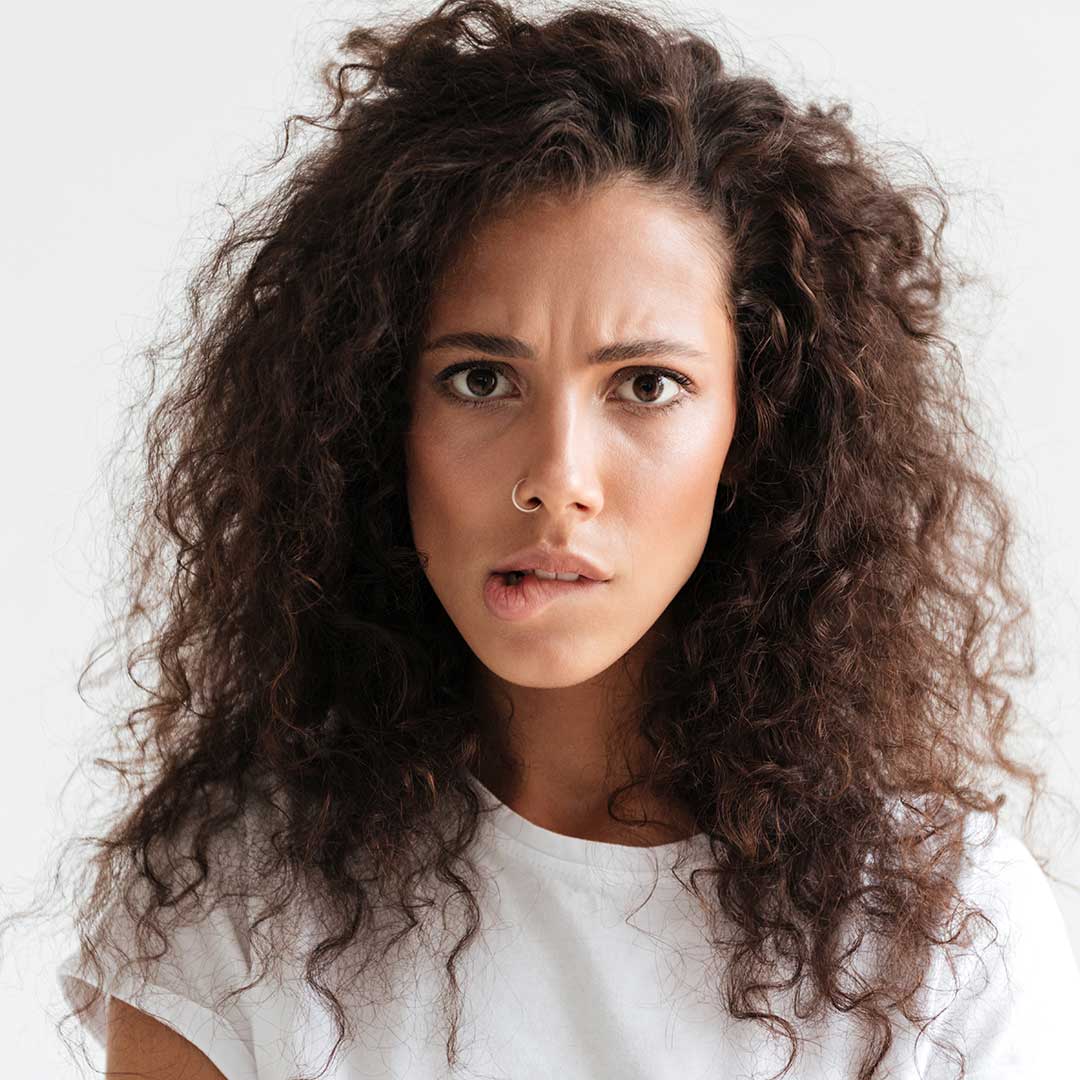
If you have curly hair, you’re probably familiar with this: Your hair looks amazing, but underneath, your scalp often feels tight or irritated. This phenomenon is known as the Lockenkopf—beautiful, well-groomed curls that are simultaneously plagued by an itchy scalp or flaky, dry scalp.
The reason for this lies in the special structure of curls. Their spiral shape makes it much more difficult for the sebum, which is actually supposed to protect the scalp, to spread down to the ends of the hair. This means that the scalp often remains drier, while the ends of the hair quickly become dehydrated. At the same time, many people with curly hair tend to wash their hair less frequently—which is gentle, but can also lead to product residue, buildup, or even silicones accumulating on the scalp.
This imbalance can lead to a stressed skin barrier, micro-inflammation, or small pimples on the scalp. The result: itchy scalp, scabs on the scalp, or stubborn dandruff that just won't go away.
A little everyday life hack for you: If you have curly hair, you should regularly incorporate a gentle but thorough cleansing routine—ideally with a sulfate-free shampoo or a scalp exfoliator. Afterward, a moisturizing leave-in conditioner or a few drops of natural oil can help soothe the scalp and restore balance.
This way, your itchy scalp stays relaxed—and your curls retain their natural shine and bounce.
Typical triggers—products, climate, and inflammation on the scalp as drivers of itchy scalp
Sometimes our scalp reacts more sensitively than we think. An itchy scalp can have many causes—and often there is more to it than just dryness. Products, climatic influences, and inflammation of the scalp are among the most common triggers.
Many shampoos and styling products contain sulfates, alcohols, or synthetic fragrances that attack the skin's natural protective film. This can cause the scalp to feel sore or even develop small red patches. Residues from silicones or product build-up can also clog pores and thus aggravate itching.
Then there's the weather: cold, dry winter air or hot summer days with UV radiation quickly upset the moisture balance of the scalp. And if you blow-dry your hair too often or wash it with very hot water, this irritates the skin even more.
If you want to do something nice for your scalp right now: For a few weeks, keep it simple—a mild shampoo, a gentle scalp scrub, and a light oil are all you need. Avoid products with harsh surfactants or perfumes, and give your scalp regular breaks. You’ll quickly notice how the itchy scalp calms down and feels clearer again.
Build-up & Co-Wash – When an itchy scalp leads to pimples, scabs, and crusts
Those who love their curls enjoy caring for them—sometimes a little too much. Many curly-haired individuals swear by the co-wash method (i.e., washing only with conditioner) to retain moisture. However, this is often where a problem arises: too much care and too little cleansing. In addition, the conditioner in the curls also serves to close the cuticle layer—which is desirable in the hair, but can close the natural pores on the scalp and thus also lead to scalp problems.
The result?Build-up —deposits of product, sebum, and dirt on the scalp.
When this build-up accumulates, the skin can no longer breathe properly. This quickly leads to an itchy scalp, pimples on the scalp, or minor inflammation. In some cases, scabs or crusts even form on the scalp because the pores are permanently clogged.
A gentle but regular scalp exfoliation can work wonders here. It removes residue without irritating the skin and restores balance to the scalp. Natural ingredients such as tea tree oil, apple cider vinegar, or aloe vera are particularly effective, as they have both antibacterial and soothing properties.
Here’s how to restore balance to your scalp: Wash your hair every one to two weeks with a mild, clarifying shampoo—ideally one that’s silicone-free and sulfate-free. Afterward, you can continue your usual hair care routine, but use smaller amounts. The rule of thumb is: less is often more. This keeps your scalp clear, fresh, and healthy—without any itching.
SOS routine – What to do about dry scalp? Quick relief for itchy scalp in everyday life
An itchy scalp can really throw you off balance in everyday life—especially if it constantly feels tight or tingly. The good news is that you can provide immediate relief for your scalp without completely changing your entire skincare routine.
Here is a simple SOS routine that you can implement right away when your dry scalp acts up again:
✓ Gently cleanse– Use a mild, moisturizing sulfate-free shampoo. It cleanses without damaging the skin barrier. Be sure to gently massage your scalp—this stimulates blood circulation and relieves itching. You can find gentle shampoos for sensitive scalps here.
✓ Care, but targeted – Massage a few drops of oil into the scalp using small circular motions.act like a protective barrier. They moisturize and soothe irritated skin. Here you’ll find oils and treatments for your scalp
✓ Don’t overdo it– Too many products can actually throw your skin off balance. Keep it minimal: less foam, less styling, more rest.
✓ Air & Relaxation– If possible, let your hair air dry more often. Heat is one of the biggest stressors for a sensitive scalp.
A little scalp pampering moment: Massage a little oil into your scalp in the evening before bed and let it work its magic overnight. This soothes, nourishes, and ensures that you wake up the next morning with a relaxed, soft scalp— , no itchy scalp.
With this simple routine, you can quickly address the first signs of a dry scalp and maintain a healthy balance over the long term.
Conclusion: Understanding, soothing, and preventing itchy scalp
An itchy scalp isn’t something you just have to live with—it’s a sign that your skin needs some attention. Whether it’s a dry scalp, dandruff, scabs, or inflammation—these are all signs that your scalp’s natural balance has been disrupted. The good news is that with the right care, gentle routines, and a little patience, you can soothe your scalp again.
Opt for mild, silicone-free, and sulfate-free products, give your skin regular breaks, and remember: less is often more. A relaxed scalp not only means less itching, but also healthier, shinier hair—and you'll notice the difference every day when you look in the mirror.
And remember: Even dry hair benefits from a healthy scalp. If you’re wondering what to do about dry hair or how to care for it, always start at the root—with scalp care. This is how you lay the foundation for naturally beautiful, strong, and well-groomed locks.
Beauty starts at the roots—and those are in your scalp. If you give it attention, care, and love, it will reward you with balance and a sense of well-being.